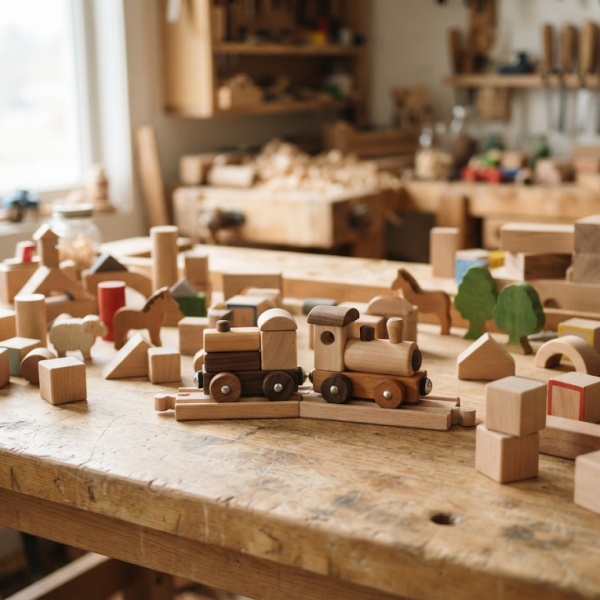
In the Ore Mountains of Saxony and the villages of Franconia, toy making is not a trend but a family inheritance. Workshops turn out wooden trains, nutcrackers, puppets and building blocks that parents in Britain, Canada, Australia and the United States buy because they last for decades. Large manufacturers in Germany add plush animals, board games and learning kits to the same tradition. A toy is a product for the most vulnerable customers in the world, so the safety information on the box and in the leaflet is not an extra, it is a legal duty and a promise to every parent. This article explains how German toy makers can prepare English documents that satisfy regulators, retailers and families.
Why Toy Documents Are Different
Toys must meet strict rules on materials, small parts, noise, flammability and chemical content. Each market has its own authority and its own wording for warnings. A leaflet that works well in Germany may not meet the requirements in the United Kingdom or North America. Plan from the start which markets you will serve, and prepare a document set for each one, with the right symbols, age marks and text.
Warnings, Age Grading and Instructions
Warnings such as not suitable for children under three years because of small parts must follow the wording required by the market. Keep them short and visible. Instructions for assembly and play should be written in simple English, with pictures and numbered steps. Test them with a parent who has never seen the product. If that person understands in one reading, the text is ready.
Technical Files and Test Reports
Behind every toy there is a technical file with a risk assessment, test reports, a list of materials, drawings and a declaration of conformity. Retailers and authorities may ask for it at any time. English versions of laboratory reports and declarations should be accurate and signed where required. Toy Industries of Europe publishes guidance on safety and regulation at toyindustries.eu, which is a useful reference for terms and processes.
Those test reports and declarations read much like clinical documents, with precise measurements, chemical names and pass-or-fail limits that leave no room for approximation. Specialist medical translation services apply the same discipline to safety files, checking every figure against the original test report and keeping the terminology consistent across the leaflet, the packaging and the declaration. For a product meant for children, that level of care is not optional, it is the reason parents trust the brand.
Working with a Specialist Provider
A manufacturer with dozens of products needs a partner who can keep the terms consistent. A provider of german document translation services can prepare instructions, test summaries, declarations and contracts, and flag legal points that need review. Provide the translator with the product drawings, a glossary of materials and the list of approved warnings. This prevents mistakes between one product and the next, and speeds up the work when you launch a new range.
Agreements with Distributors and Retailers
Distribution contracts define territory, minimum orders, prices, labelling duties and responsibility for recalls. If a defect is found, who informs the authorities and who pays for the recall? These questions must be answered in writing before the first pallet leaves the warehouse. For wider background on product information rules, see our article on GPSR translation requirements.
Product Pages and Online Shops
Online shoppers cannot touch the toy, so the page must do the work. Give the age range, the material, the size, the weight, the safety marks and what is in the box. Use photographs from several angles and a picture of the toy in the hands of a child, with permission. Avoid vague words such as safe and natural unless you can explain what they mean. Parents trust clear facts more than claims.
Packaging and Shelf Presentation
Packaging must carry the name of the toy, the manufacturer, the address, the batch, the warnings and the contents. It must also look good on the shelf. Work with the designer early so that the legal text has a proper place and does not look like an afterthought. Keep a master file of each version, with a note of the markets where it is valid.
Trade Fairs and Buyer Meetings
The Nuremberg toy fair brings buyers from around the world, and many of them make decisions in minutes. Prepare a catalogue in English with product numbers, prices and minimum orders. Train staff to explain the philosophy of the brand in a few sentences. A short story about the origin of the workshop and the materials makes the product memorable.
Customer Service and Spare Parts
Parents write when a part is lost or a toy does not work as expected. Prepare templates in English that are friendly and precise, and offer a simple way to order spare parts. Keep a record of questions, because they show where instructions can be improved. A prompt and kind answer often turns a worried customer into a loyal one.
A Careful Voice for Careful Products
Review your English documents once a year with a safety expert and a native reader. Update warnings when rules change, correct outdated phrases and check that the product pages match the packaging. When the words around a toy are as careful as the craftsmanship, parents feel it, and a brand with that kind of trust can be handed from one generation to the next, just like the toys themselves.